







Public health campaign and Special Case: Frequently Asked Questions
The Special Case
Here we provide answers to some of the frequently asked questions arising from the case. This presents the facts arising from the decision and do not seek to defend the decision in any way.
The Special Case was heard before the Full Bench of the NSW Industrial Relations Commission (IRC) over six weeks from September 2025, with closing submissions in December. The Full Bench comprised of two Judges (including the IRC President and Vice President) and one Commissioner.
The case argued the value of members’ work exceeded the remuneration you were receiving, and also focused on the historical gender-based undervaluation of the nursing and midwifery professions.
Previous NSWNMA-led special cases to win wage increases and professional recognitions for nurses and midwives were run in the IRC during 1989 (Professional Rates case) and 2003 (2003 Nurses Work Value Case).
Background of the Special Case
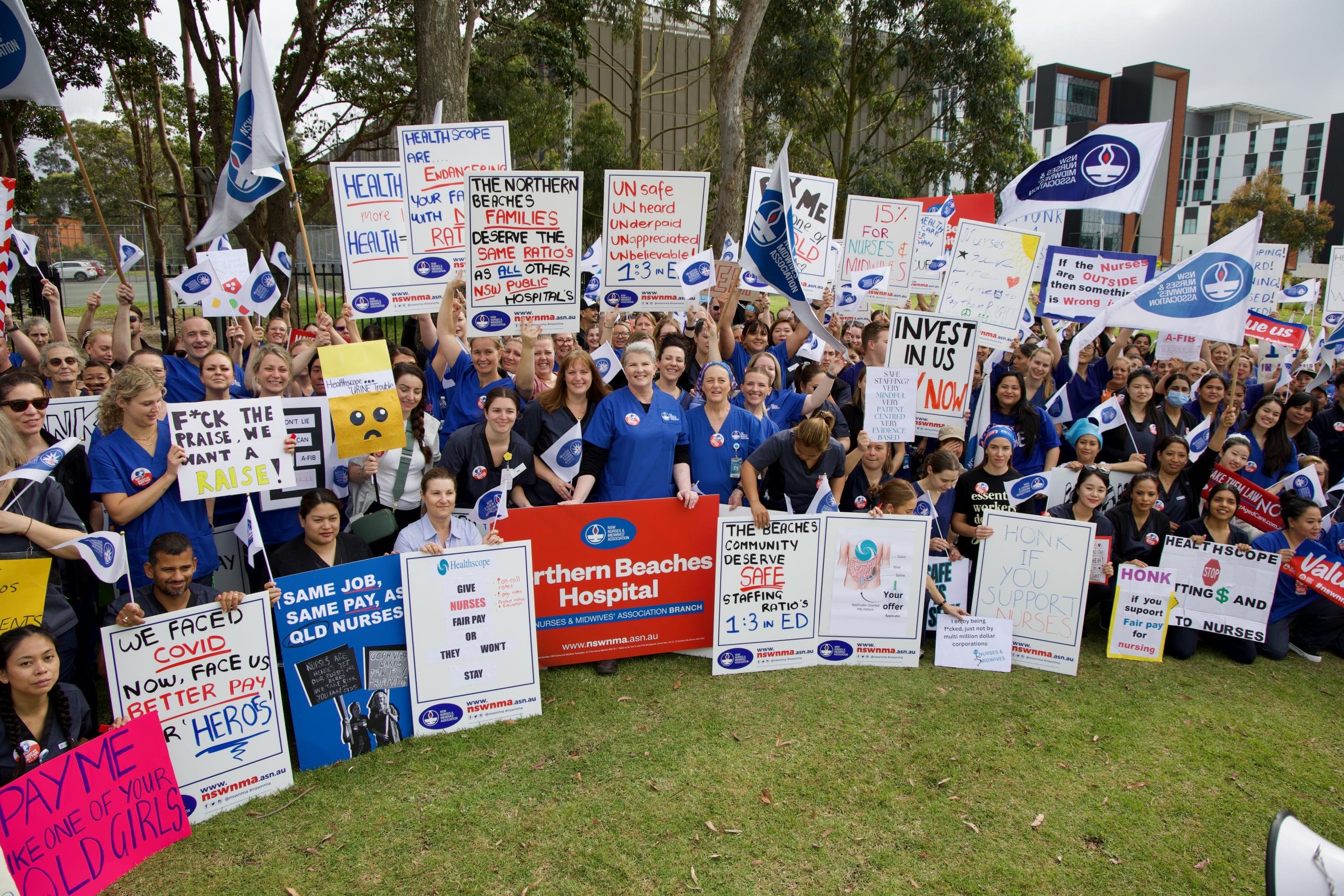
Public sector members campaigned robustly to improve pay and conditions in the Public Health System Nurses’ and Midwives’ (state)
Award 2024. Despite all this hard work, the NSW Government would not make an offer that addressed the structural issues impacting the nursing and midwifery workforce.
In June 2024, the NSWNMA was forced to seek arbitration on our terms when the NSW Government made an IRC application for a new three-year Award, which included salary increases of 3% in 2024, 3% in 2025, and 3% in 2026.
Our subsequent strikes, which defied IRC orders, led to the IRC threatening to not hear evidence from the NSWNMA if further industrial action occurred. Had we kept striking, a new Award would have likely been made in favour of the Government’s position. As a result, the NSWNMA launched one of the biggest cases the state has ever seen on behalf of members.
The NSWNMA commenced negotiations with the Ministry of Health in early 2024, seeking a fair and reasonable agreement on pay and conditions. The strong sentiment of the members was that Labor should come to the table with a reasonable offer.
Throughout numerous bargaining meetings, the union advocated for a timely and positive resolution. However, once it was clear the Ministry would not negotiate a fair and respectful increase that addressed the structural issues, we pursued the matter through the Special Case.
In February 2025, public sector members voted to accept a Log of Claims which would form the basis of the Special Case:
- 35% pay rise over 3 years.
- Sick leave increase to 20 days.
- Meal allowance for Patient Transport Service members.
The log also included a claim to increase the night duty penalty rate, however this was settled prior to the hearing following a vote of members.
35% was identified on the back of the Federal claim for nurses and carers covered under the those Awards which saw carers receive up to 28%
The NSWNMA filed 37 member witness statements spanning multiple specialities, geographical areas, and classifications. This evidence was supported by 12 witness statements from experts and academics whose expertise covered nursing, midwifery, gender, and economics. In total, the NSWNMA submitted 17,400 pages of evidence prior to the hearing.
We argued that public sector nurses and midwives were underpaid given:
- Impact of inflation
- The work we do has changed over the last 16 years (work value)
- That the work has been undervalued as a result of being a predominately female workforce (gender undervaluation)
- That the wages were not high enough to recruit and retain the workforce needed
The Ministry of Health’s witnesses included members of Ministry Executive, managers within NSW Health and economic analysts. Their evidence totalled approximately 6,000 pages and attempted to undermine the NSWNMA’s arguments around the changes to the work, changes in the acuity of patients, the impact of technology on the workforce. The Ministry argued that the cost of our claim would negatively impact the NSW economy; that the state could not afford a rise above 9% over three years.
The IRC makes decisions in these cases as directed by the Industrial Relations Act which contains the parameters for their decision-making abilities.
Under the Act, when arbitrating Awards the IRC must set “fair and reasonable” conditions of employment, and in doing so, it must have regard for the public interest. This includes the Full Bench considering the ‘Award Making Principles’ around productivity and efficiency, work value, and gender-based undervaluation.
The Act also requires the IRC to consider the state’s economic circumstances – whether the state can afford to meet the claim and how it may impact the NSW State Budget. This is a compulsory consideration in decision making.
The Full Bench considers all the evidence, both written and oral, within the parameters of the above legal frameworks. The final decision was over 90,000 words. This reflects the significant volume of evidence which was considered by the Full Bench.
Work Value
The IRC was “comfortably satisfied” that in the last 16 years there has been a substantial increase “in the intensity and complexity of the work performed by nurses and midwives which has been addressed by the application of new skills and new technologies and new ways of working, which when considered together meet the strict test.”
In making its decision the IRC considered several factors, including:
- that they would increase rates based on work value, the value of money, and gender undervaluation, and so needed “to have proper regard to the combined outcome in light of our obligation to consider the public interest and the mandatory considerations”.
- the “overlap between the work value changes … and gender undervaluation” and “[a]ny increase needs to ensure there is no ‘double counting’”.
- the “potential for any increase to create expectations by other workers, in particular health workers” i.e. “a risk of flow on”.
In relation to ENs and AIN/AIMs, the IRC found: “In respect of enrolled nurses and assistants in nursing we find that the changes in duties and education that we set out above have been more significant than that which has applied to registered nurses and midwives, justifying higher increases.”
The IRC didn’t apportion a certain percentage to any particular part of the wage claim (e.g. work value, gender undervaluation, value of money), instead in determining what rates were appropriate they were “acutely conscious of the fiscal impact of any increase in rates over and above that which has been budgeted.” and its effect on inflation.
The Work Value Changes Principle imposes a significant burden on unions seeking work value pay increases. Under the Principle, award wages may only be increased if it can be demonstrated that there have been changes in the nature of work, skill and responsibility required or conditions under which work is performed to such an extent that the changes constitute a significant net addition to work requirements. This is referred to as the “strict test”. There can be no double counting in the sense that previous changes in any previous work value adjustments cannot be included in any new work value claim. Changes to work by themselves are not enough to justify an increase in wages.
This Special Case considered a wide array of evidence of work changes over a long period of time: 1 July 2009 to June 2025, twice as long as that considered in the 2003 Nurses Work Value Case. The NSWNMA will examine each aspect of the decision to determine whether any scope remains to seek further work value increases. In all likelihood however, we will need to await further work changes into the future before a viable work value claim can be pursued.
The IRC did consider recruitment and retention. However, whilst they acknowledged that an increase to remuneration would have a positive impact on recruitment and retention, they did not grant any further pay increases on that basis.
The IRC stated, “The data suggests that there are currently no significant or widespread issues with the overall retention of nurses in NSW” and “… we (Full Bench) accept there remains persistent difficulties in recruiting nurses and midwives (and indeed other health professionals) to regional areas, and in particular remote areas. NSW Health has a series of measures to address that issue, that include increased scholarships and travel support to attract nurses and midwives to those areas. Money alone, however, is not the answer as the issues that make recruitment difficult are not limited to pay, but extend to the availability of suitable accommodation, childcare and other services”
Gender Undervaluation
Yes. The Full Bench accepted the NSWNMA’s evidence that the work of nurses and involves the exercise of valuable skills that had not previously been expressly considered in the setting of wages.
The Full Bench also accepted that these skills had been excluded because they are gendered in nature and had not been formally recognised, nor necessarily recorded in lists of tasks are often referred to as ‘invisible skills’.
The NSWNMA presented evidence of multiple ‘invisible skills’, such as complex communication skills, managing trauma and emotionally complex situations, and employing person-centred care. The Full Bench accepted all the NSWNMA’s evidence on ‘invisible skills’, apart from two: leadership, and emotional impact
- “We (the Full Bench) are satisfied that the rates which we set remove any existing gender undervaluation having had due regard to the caring and other invisible skills historically not expressly considered by wage fixing tribunals”.
However, the IRC found that in particularly in the case of RNs, the 1989 professionalisation increases went some way to addressing gender undervaluation.
The IRC also found there were some other factors which they considered justified a larger increase for AIN/AIMs:
- A greater proportion of AINs’ role is caring, and therefore AINs’ work would likely have been historically undervalued to a greater degree.
- Federal pay rates were higher than NSW state rates across the board for nurses, but there was a larger gap between federal and state pay for AIN/AIMs than for ENs or RN/Ms.
We maintain that more intervention from government is needed to address gender undervaluation across NSW, particularly for nurses and midwives, as evidenced by the widening gender pay gap in NSW public service.
The Full Bench outlined concerns about how resource intensive gender undervaluation cases are and questions as to whether legislative reform and/or a more structured administrative or collaborative mechanism to support the identification and timely resolution of pay-equity claims. This is something the NSW Government could, and should, take on if they are serious about tackling gender undervaluation as well as the persistent gender pay gap.
The overall cost to government of the claim the NSWNMA put forward was the subject of much of the decision. This unfortunately applies to both the work value component and the gender undervaluation component.
In their decision, the Full Bench stated, in respect of the outcome reached, “…the fiscal impact will not be so significant as to prevent the NSW Budget maintaining a sustainable operating position or put at risk the NSW Government’s capacity to maintain a sustainable debt position”.
Economic Analysis
Yes. The IRC accepted our arguments that the COVID-19 pandemic led to below trend wage increases and above trend inflation, and decided it was appropriate to apply a one-off reset to wages on the basis that the real value of money had decreased.
The IRC, however, did not break down the total increase into its components; the final wage outcome accounts for gender undervaluation, increases in work value and decreases in the real value of money
The state of the NSW economy and the fiscal position of the NSW government are mandatory considerations for the IRC when setting rates of pay. While the IRC can choose how much weight to place on economic and fiscal considerations, these are considerations that they must take into account and weigh against other arguments which are put forward by the parties.
The IRC considered economic and fiscal factors such as:
- The impact of any increase in wages on the NSW Government’s budget.
- The impact of any increase in wages on the NSW Government’s debt position.
- The credit rating of the NSW Government.
- The inflationary impact of any increase in wages.
These factors were weighed against the arguments put forward by the NSWNMA in relation to decreases in the real value of money, gendered undervaluation and increases in work value.
Backpay
The Ministry of Health confirmed that all increases and back pay will commence from 17 May 2026. Retrospective payments will be made over four different pay cycles, so exact pay dates will depend on which cycle a member is in. All increases and back pay should be paid by the week ending 5 June 2026.
The only exception to this is the back pay of the Crib Away Allowance for Patient Transport Service members. We will communicate this directly with members as soon as we have confirmation of the expected timeframe.
If from 1 July 2025 your base salary changed due to gaining a promotion or through incremental progression (say, from RN5 to RN6), the amount you are back paid should take account of this. For example, if you worked as an RN7 from July to November, but as an RN8 from December to April, the amount you are back paid while correlate to the time you spent working in those respective roles.
Similarly, if you had a period of acting up in a higher grade, that should also be reflected.
If members have left their NSW Health position on or after 1 July 2025, they are entitled to back pay for any work performed with NSW Health after this date. This means any work that was undertaken from 1 July 2025 onwards, as this is from when the new rates will apply.
If you do not receive this back pay you should contact the NSWNMA for advice
This is a complex question and will depend on individual circumstances.
Please contact the NSWNMA by using the contact form or emailing gensec@nswnma.asn.au for advice specific to your individual circumstances
Length of the awards
The IRC gave three reasons for the new Award starting in 2025, as opposed to 2024:
- Backdating to 1 July 2024 would have a larger impact on the fiscal position of NSW, which it said would have required it to consider awarding a lower increase.
- Commencing in 2025 provides greater certainty; Awards backdated to 1 July 2024 would mean the final increase would be in a few months’ time and negotiations for the next award would have to commence almost immediately.
- The NSWNMA did not commit to arbitration until late 2024, “choosing instead to spend 6 months seeking increases by industrial action in the face of recommendations of” the IRC. The IRC went on to say that “meant the preparation of the case could not commence before February 2025 and prevented the case being heard before November-December 2025 so delaying the outcome by at least 8 months”.
Flexible work
Unfortunately, not.
The NSWNMA sought to include elements of the NSW Health Policy Guideline GL2023_020 Flexible Work (More Than One Way to Work) into the Award. This policy has since been replaced by the 2025 version.
- The IRC stated that “While we accept much of what the NSWNMA put in support of the claim, we reject the claim as pressed”. This was largely due to the lack of evidence that members have been denied access to flexible work arrangements under the NSW Health policies.
- The Full Bench used the evidence of the NSWNMA’s managerial witnesses to form the opinion, that there is the ability for those positions to manage flexible work requests.
- “Even if we were of the view that the Existing Awards ought to contain a suitable clause, we would not uphold the claim as pressed. The Secretary correctly notes that the proposed clause seeks to make mandatory (at pain of civil penalties) the application of a document that is not drafted in terms of obligations. Making mandatory the application of a document that is broadly aspirational and non-specific is likely to give rise to disputation and uncertainty”.
Sick leave claim
The IRC gave several reasons for this:
- The IRC said the granting of the claim would increase pressure on nurse and midwife managers to manage unplanned absences, potentially reduce services, and result in a need for more nurses and midwives to be employed overall, and result in a substantial increase in expenditure to fund the additional backfilling of nurses and midwives.
- The IRC stated that no evidence was established that nurses and midwives are sick more often than workers in other industries and to what extent. Only limited examples of nurses and midwives exhausting their sick leave were available.
- There was no evidence to establish the extent to which sick leave is used for illness or injury, or specifically as a result of infectious disease or intensity of work or for other work-related reasons, as opposed to utilisation to care for family members.
- The PHS entitlement is the same as most other Health Employees. As part of the Special Case, the NSWNMA lodged a note with the Full Bench that compared the PHS Award with the 32 other Awards that apply to Health Employees. 30 of the 32 Health Awards provide the same quantum of sick leave as the PHS Award.
Nurses and midwives have arguably comparable sick and FACS leave to other public sector health employees. Awards applying to public sector workers in NSW provide variable entitlements. The Full Bench summarised the position in respect of certain key groups of employees:
- all other NSW Health employees, except for ambulance paramedics, have the same entitlements as nurses and midwives, with only minor differences, namely: the equivalent of two weeks sick leave that can also be used to care and support others, plus three days FACS leave every two years.
- most employees covered by NSW public sector awards, including those applying to ambulance paramedics, teachers, police officers, corrective officers and crown employees whose conditions are set by the Crown Employees Conditions of Employment Award, are entitled to 15 days (three weeks) sick leave per annum, plus a similar entitlement to FACS leave as nurses and midwives.
Next steps
Do members get to vote on the decision?
No. As this has been an arbitrated court process, the decision does not go to members for a vote. The pay rises you voted on last year were negotiated outcomes between the union and the government. This is a different process.
The IRC decision is binding on both our union and the government. Once the decision is made, the Award is amended and then the pay and allowance increases commence.
Can we appeal the decision?
No. Section 179 of the Industrial Relations Act 1996 (NSW) “Finality of decisions” states that a decision of the IRC is final and may not be appealed against, reviewed, quashed or called into question by any court or tribunal.
Any appeal to a higher court would have to be made out on complex areas of law, such as an error in legal decision making.
What can we do now?
Officers of the Association are visiting workplaces to hear from members as to what they want to do next. Members are encouraged to attend branch meetings and discuss what they think the next steps should be. We will make that decision through our democratic processes.
The NSWNMA will do further analysis of what the decision means and has sought legal advice about what options are available to us moving forward.
The NSW Government is under no obligation to take any more action, other than ensuring the decision is enforced. The NSWNMA will consider the utility of our options to continue to put pressure on the government to ensure more improvements are made.
We share the disappointment of many members and we will maintain our focus on the government for failing to address the issues. The time for action will be decided in consultation through branch meetings and our Committee of Delegates and Annual Conference processes.
Meanwhile, we will continue to take action to ensure your Award and work, health and safety entitlements are met, and will continue to work with members on local issues. Defending and improving your working conditions must continue. If you have an issue at your workplace that a group of you want to work on, discuss options with your branch and your Organiser.
Page lasted updated 29 April 2026.