

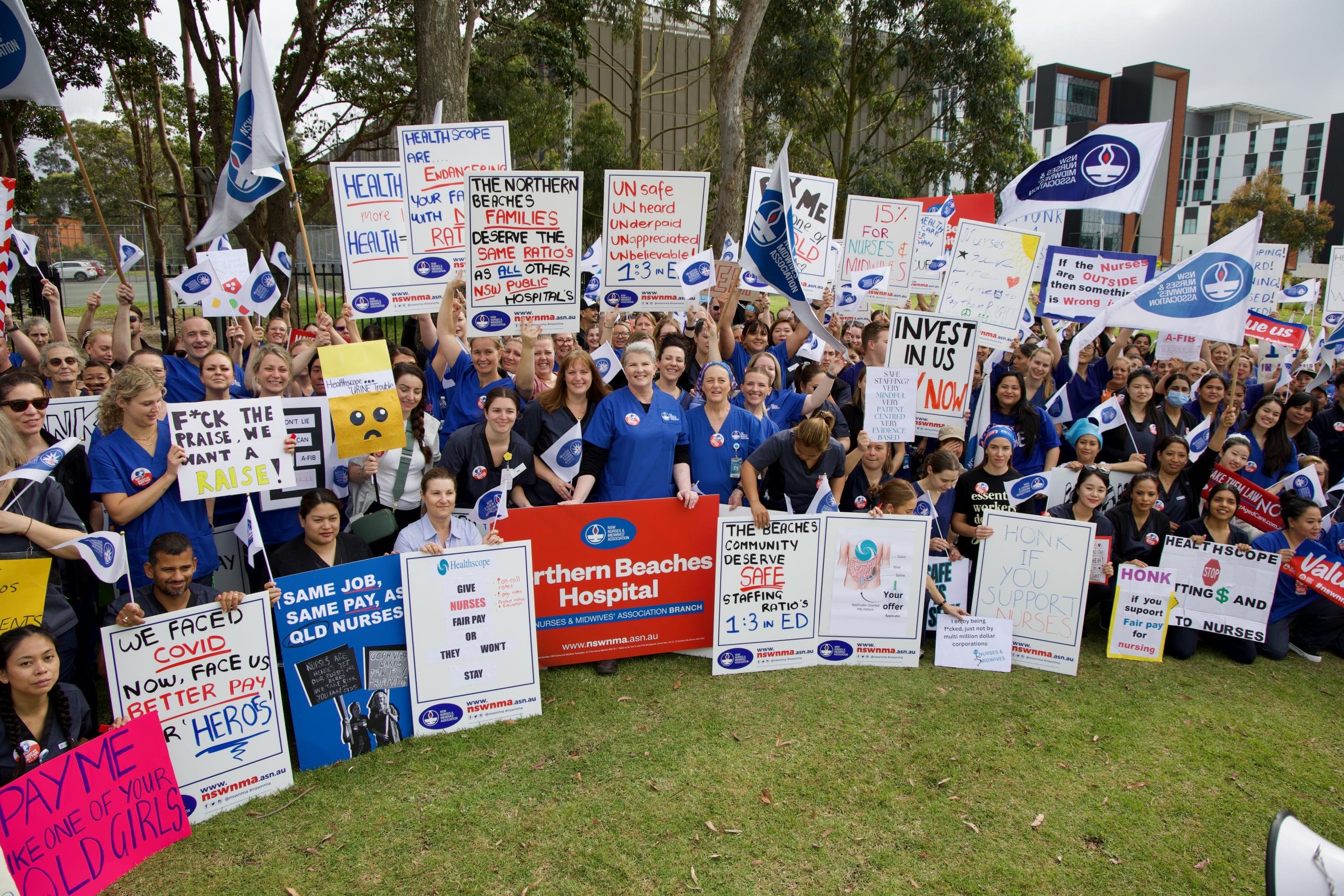

Following sustained campaigning by the NSW Nurses and Midwives’ Association (NSWNMA), nurse-to-patient ratios will finally become a reality across general medical, surgical and palliative care wards, with recruitment to commence for more than 950 nurses to be injected into the public sector workforce.
The implementation will see additional nurses recruited to more than 360 general inpatient wards, including Medical Assessment Units and Surgical Assessment Units, across Peer Group A, B, and C hospitals, spanning Principal Referral through to District hospitals.
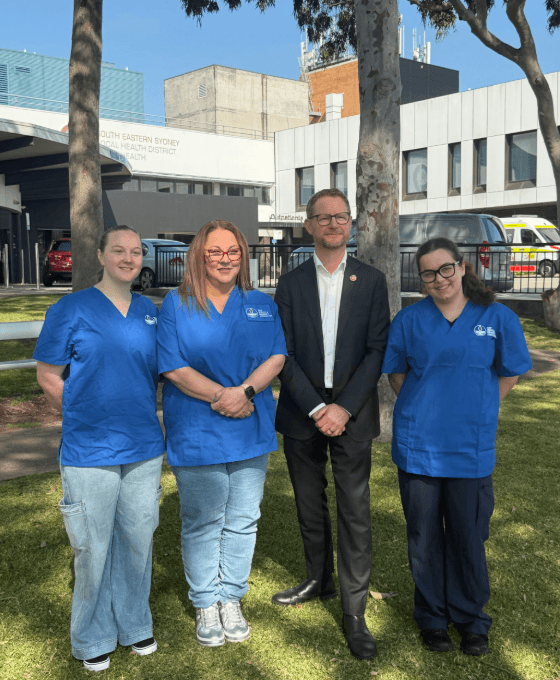
NSWNMA General Secretary, Michael Whaites, welcomed the progress, which ensures all 15 Local Health Districts statewide will benefit.
“By introducing this reform across peer group A, B, and C hospitals, including metropolitan, regional, and rural facilities, members and patients statewide will see the difference,” said Mr Whaites.
“Patients will receive improved care from safer staffing, and our members will have the support they need on every shift.”
“We know it will require significant recruitment to fill these positions, but the road to rebuilding the workforce must include ratios. Had it not been for our union and the collective action of members across NSW, these staffing improvements simply would not be happening.”
Under the agreed levels, public hospital wards will see minimum ratios of one nurse to four patients on morning and afternoon shifts, and one to seven on night duty, alongside supernumerary in-charge staffing on designated shifts.
The creation of the Safe Staffing Levels Taskforce to oversee the rollout of ratios, was a key election commitment by the NSW Government, with a promise to recruit 2480 full-time equivalent (FTE) nurses and midwives by the end of the term. Labor committed to introducing ratios in the state’s Emergency Departments, NHPPD wards, Postnatal wards, ICUs and MPSs (Multi-purpose Service sites). The 2,480 funded FTE have been applied to EDs, the medical/surgical and palliative care wards and units, and seven dedicated postnatal wards.
Since the rollout began two years ago, 81 emergency departments in NSW have begun implementing nurse-to-patient ratios, while planning continues for the rollout of ratios across seven dedicated postnatal wards, to improve maternity care for women and babies.
NSWNMA Assistant General Secretary, Katrina Bough, emphasised that while the milestone represented a substantial step in the right direction, the union remained focused on securing ratios across all clinical settings.
“We remain fully committed to achieving our complete ratio claim and welcome continued discussions with the government to drive this forward,” Ms Bough said.
“Remaining wards still need better staffing and they have not been forgotten. We will hold the government accountable to their commitments and keep campaigning until every specialty area is included.
“This progress belongs to our members, who campaigned for safer care through evidenced based workloads. The lesson is clear: when members organise and stand together, we win.”