Reconciliation Action Plan
Our Commitment to Reconciliation
As nurses, midwives and carers we are privileged to care for people at every stage of life and in every community. This responsibility extends beyond delivering culturally safe and compassionate healthcare. It requires us to actively contribute to a fairer and more just society: one where Aboriginal and Torres Strait Islander peoples enjoy equality, self-determination, cultural safety, and the opportunity to thrive.
This Reconciliation Action Plan is an opportunity for our union to strengthen relationships, build trust, and walk alongside Aboriginal and Torres Strait Islander peoples in pursuit of a shared future. It reflects our commitment to listening, learning, and acting, and to ensuring that reconciliation is embedded in the work we do every day.
Together, we can help create workplaces, health services, and communities that honour truth, celebrate culture, reduce inequity, and advance justice. We are proud to take this step forward and remain committed to turning our intentions into meaningful and lasting change.
Our Reflect RAP
The NSWNMA recognises that its members and staff live, work and play on unceded Aboriginal lands. We are committed to creating inclusive and culturally safe workplaces. This RAP demonstrates our commitment to reconciliation and provides a framework to guide our reconciliation efforts with Aboriginal and Torres Strait Islander peoples.
While there is a growing awareness of the importance of reconciliation, there is an opportunity to deepen staff and member understanding and engagement across all levels.
Developing a second Reflect RAP will provide the foundation for a more structured, purposeful approach to reconciliation, empowering our organisation to make a positive impact on our workplace culture by standing against racism, the support we provide Aboriginal and Torres Strait Islander nurses, midwives and carers (our members), and the broader reconciliation movement.
Read our RAP
RAP Artwork
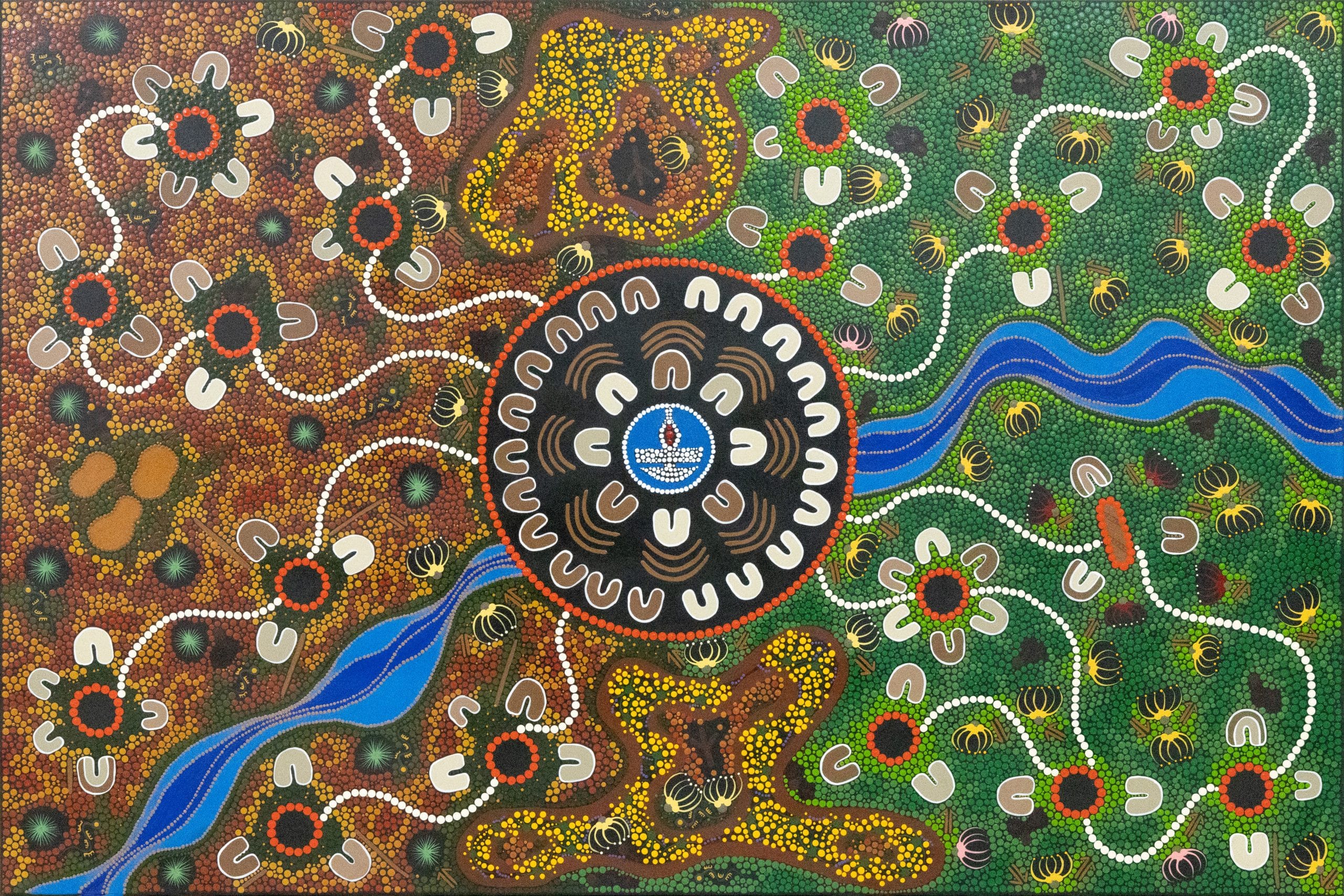
This painting is a representation of the journey to developing reconciliation as well as the harmony in community when it is done right.
Using the rich vocabulary of narrative symbolism, the journey begins from the dominant centre circle. Here initially begins the division of indigenous and non-indigenous peoples, demonstrated through the outer layer of people. The protection of a wind break indicating that with our care, the process of Reconciliation is always protected.
At the centre is the NSWNMA organisation, central to this process, for protection and its outcomes. Outside the circle is a representation of the community with reconciliation. It shows a healthy community, respectful of the land, flora and fauna. Water is for life, ongoing, and orange small circles show widespread healing, cultural humility.
It goes from the green of the coast to the orange browns of the desert. The landscape of mountains, earth, rivers and rocks is punctuated with flowering gums, desert grasses, wattle (and Hardenbergia violacea), emu, kangaroo, eagle, goanna, echidna and ants as well as man and woman.
Also highlighted is the birthing place, while the entire circle is surrounded in a line of vivid orange – traditionally a healing colour. It depicts pregnant women, the elderly and the nurse … reconciliation is healing.
About the Artist
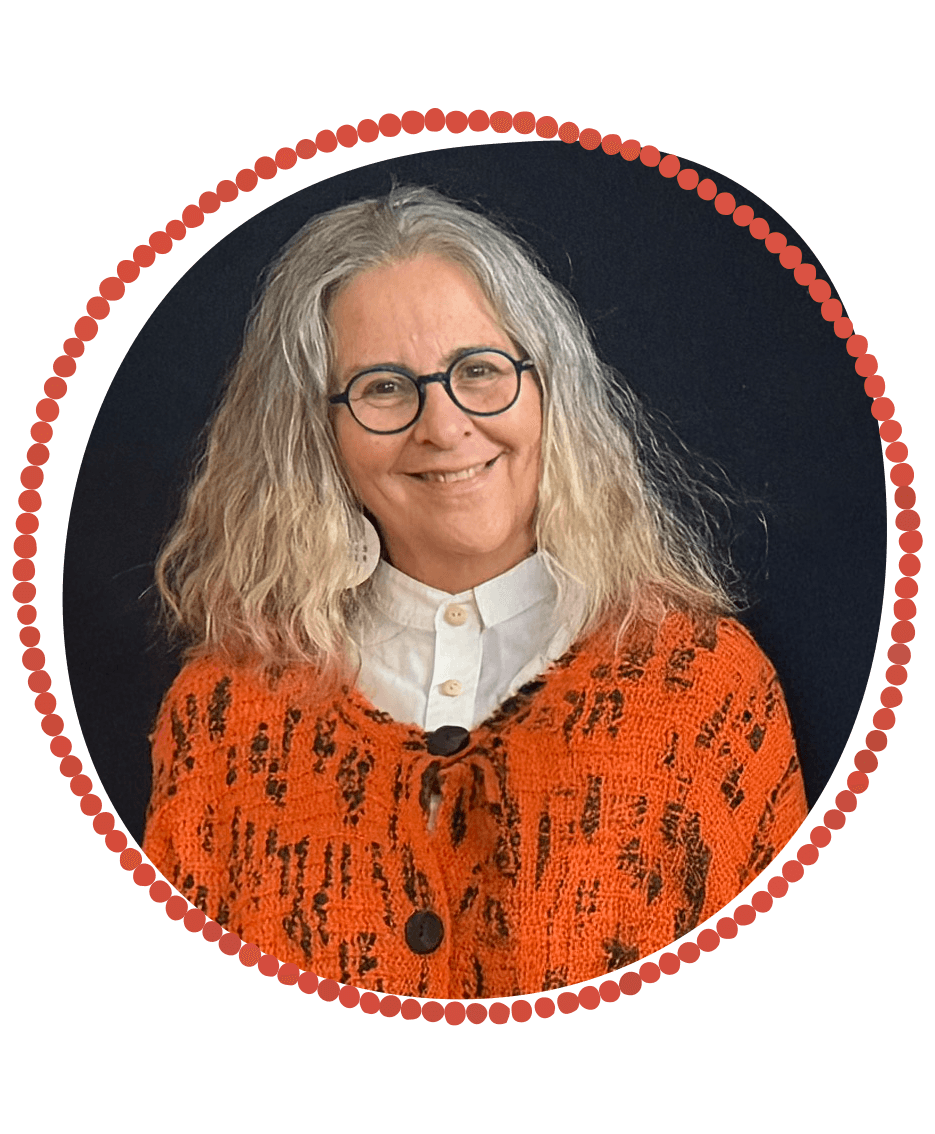
At the heart of the NSWNMA’s new Reflect Reconciliation Action Plan (RAP), the Association has been honoured to recognise the contribution of the first Aboriginal person to be endorsed as a nurse practitioner in Australia, Lesley Salem.
A proud descendant of the Wonnarua Nation in NSW and Order of Australia recipient, Lesley was invited to describe her vision of the Association’s reconciliation journey.