
A groundbreaking report launched at the NSW Nurses and Midwives’ Association (NSWNMA) 81st Annual Conference has revealed a lack of choice, control and flexibility is contributing to the staffing shortages and retention issues in the public health system.
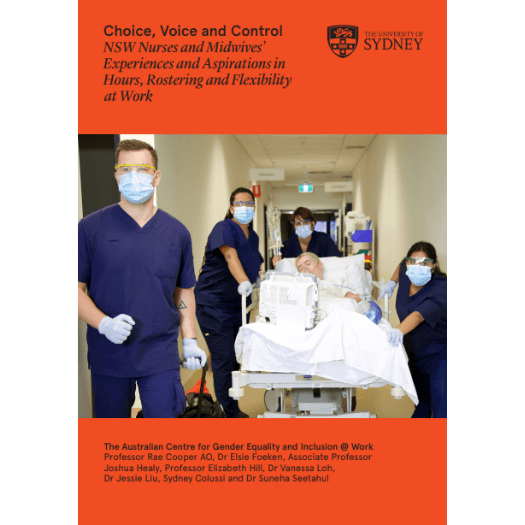
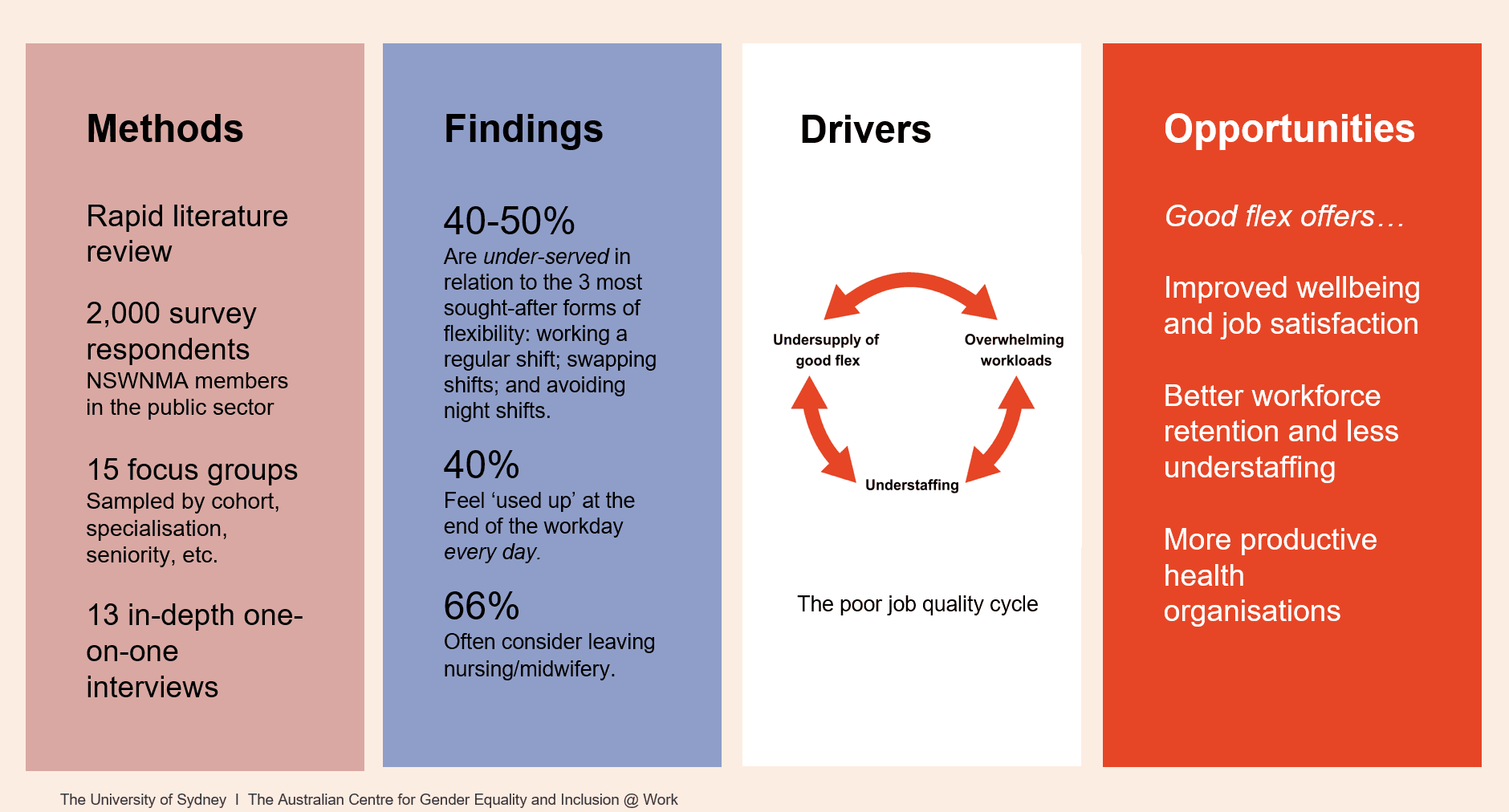
The landmark Choice, Voice, and Control report, written by Professor Rae Cooper AO and her team from the Centre for Gender Equality and Inclusion @ Work at the University of Sydney Business School, examined the critical needs of more than 2,000 public sector nurses and midwives across the state.
The report found 66% of nurses and midwives often consider leaving the professions, 82% agreed they had too much work to do, 56% said they often had to stay at work after their shift ended, 54% didn’t believe they had an adequate work-life balance, and 88% believed they were paid a low wage for the work they do.
NSWNMA General Secretary, Michael Whaites, said the findings should serve as an urgent blueprint for the state government.
“This report lays bare the realities that are driving our public sector workforce to breaking point. For years, nurses and midwives have been telling us they are exhausted and this is clear, irrefutable data showing exactly why: the current way healthcare work is designed is unsustainable,” said Mr Whaites.
“We know the current workplace design has a domino effect, with understaffing leading to overwhelming workloads which results in regular overtime. This creates a cycle of poor job quality, leaving nurses and midwives with less time and ability to manage their caring and other responsibilities, let alone have time for recreational activities.
“The report identified several key factors required to rebuild the female-dominated workforce, including flexibility and better control over rosters and shifts, manageable workloads that protect worker wellbeing, work design that encourages work-life balance and increased support from managers.
“Whilst we are finally seeing some movement on workloads and pay, we have to ensure that the rostering systems are future fit.
“We’ve called on the government and NSW Health to collaborate with us on addressing the report’s recommendations, which warn that a failure to establish and scale flexibility initiatives, provide greater control over rostering, and deliver manageable workloads, will only compound the public health system’s recruitment and retention struggles.
“We cannot afford to file this report away on a shelf. Already we are seeing nurses and midwives decreasing their hours, despite the hit to their wages, as the only way to gain a sustainable work-life balance.
“With a global shortage of nurses and midwives, we can’t sit back and expect the status quo to deliver change. If we, the union, government and NSW Health, are serious about solving the recruitment and retention crisis in NSW, then together we must use these findings to deliver genuine flexibility.”
Professor Cooper, who presented the report on day two of the conference, highlighted the risks that arise when the highly feminised nursing and midwifery professions do not have access to “good flex”.
“Nurses and midwives are essential to the health and wellbeing of our communities and the functioning of our healthcare system. In this study, nurses and midwives told us they need flexibility and want better control over rosters and shifts, more manageable workloads, and work that lets them have a life,” said Professor Cooper.
“A sustainable workplace provides what we call as ‘good flex’: predictability, support and genuine choice. This is different from ‘bad flex’, where workers are expected to absorb unpredictable hours or changes to their working time. Flexibility is only good when it works for both workers and employers, and this is a key retention factor in feminised, frontline workforces like nursing and midwifery.
“The public system cannot continue to rely on the commitment of its staff, while expecting them to sacrifice their own wellbeing. We must ensure that the people who save our lives are not sacrificing their own lives to do it.”
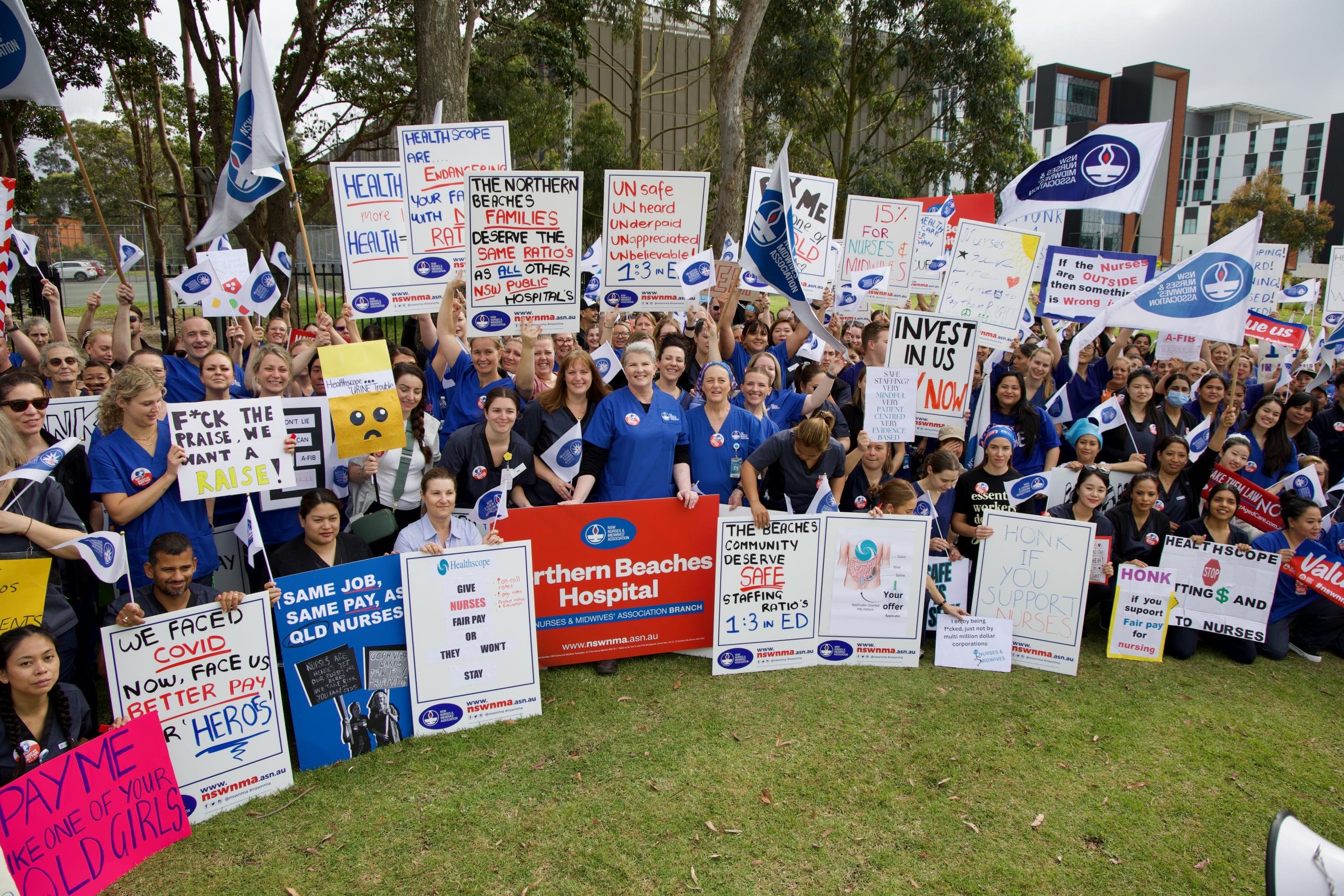
With more than 700 nurses and midwives in attendance at the conference, NSWNMA Assistant General Secretary, Katrina Bough, said both the report and this year’s theme, ‘Leading Together, Shaping Tomorrow’ underlined the need to futureproof the state’s health workforce.
“Nurses and midwives deserve good flex. It’s imperative the government acts on this report and starts making changes today. To futureproof our workforce, we must scale flexible work models that support our female-dominated professions, rather than relying on a rigid system that burns people out,” said Ms Bough.
“Rebuilding the workforce requires more than just recruitment targets, it requires senior management support, predictable rostering, and a cultural shift that protects the wellbeing of the nurses and midwives providing the care.
“Nurse unit managers are often bearing the burden of rostering, so they need the systemic changes that will support them to do this in a way that promotes good flex for their nursing and midwifery staff.”
In addition to the launch of the Choice, Voice and Control report, the 81st Annual Conference included presentations on global nursing leadership, workforce readiness for artificial intelligence, and a keynote speech from Professor Peter Greste, the award-winning foreign correspondent.
Delegates will debate motions including lobbying for protection against workplace violence for nurses and midwives, advocating for alternative models of maternity care in rural, regional, and remote areas, and demands on the NSW Government to take responsibility for building homes that nurses, midwives, carers and other essential workers can actually afford.
The 81st NSWNMA Annual Conference runs until Wednesday 29 July.
A copy of the report is available here: Choice, Voice, and Control.